Mahishasura Mardini Stotram: A Comprehensive Guide
Mahishasura Mardini Stotram PDF downloads are readily accessible online, offering devotees convenient access to this sacred hymn across various platforms and formats.
The Mahishasura Mardini Stotram, a powerful hymn dedicated to the Goddess Durga, holds a revered position in Hindu devotional practices. Its widespread availability in PDF format underscores its accessibility to devotees globally, facilitating both personal study and communal recitation. This stotram isn’t merely a collection of verses; it’s a vibrant narrative of divine power triumphing over demonic forces, specifically the buffalo demon Mahishasura.
The hymn’s popularity is further amplified by its presence on numerous online platforms, offering the text in various formats like PDF, MP3, and DOC, catering to diverse preferences. The ease of downloading the Mahishasura Mardini Stotram as a PDF allows individuals to engage with its verses at their convenience, fostering a deeper connection with the divine feminine. It’s a cornerstone of Durga worship, particularly during Navaratri, and its verses are believed to invoke blessings of strength, courage, and protection.
Historical Context and Origin
The origins of the Mahishasura Mardini Stotram are deeply rooted in ancient Hindu tradition, though pinpointing a precise date remains challenging. It’s believed to have emerged as a devotional expression connected to the Durga Puja tradition, celebrating the Goddess Durga’s victory over the demon Mahishasura. The stotram’s text, widely circulated today as a PDF, likely evolved through oral transmission before being committed to writing.
The availability of the stotram in PDF format, easily found through online searches, speaks to its enduring relevance. Scholars suggest its composition may date back several centuries, possibly to the medieval period, though variations and interpretations have accumulated over time. The download of the Mahishasura Mardini Stotram as a PDF allows for preservation and wider dissemination of this important text, ensuring its continued practice and study by devotees across generations.
The Story of Mahishasura and Durga
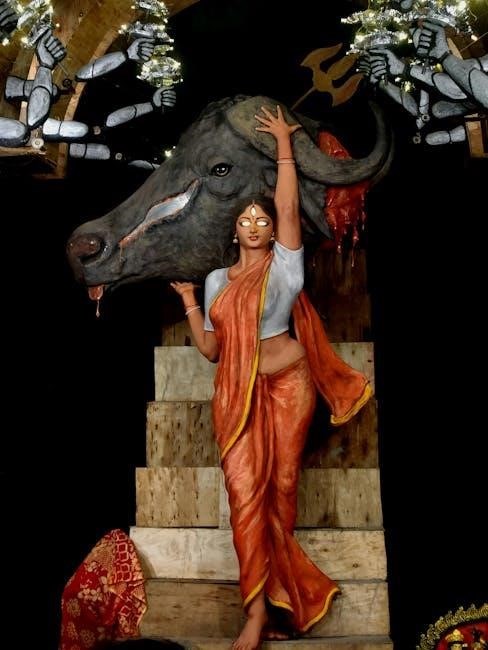
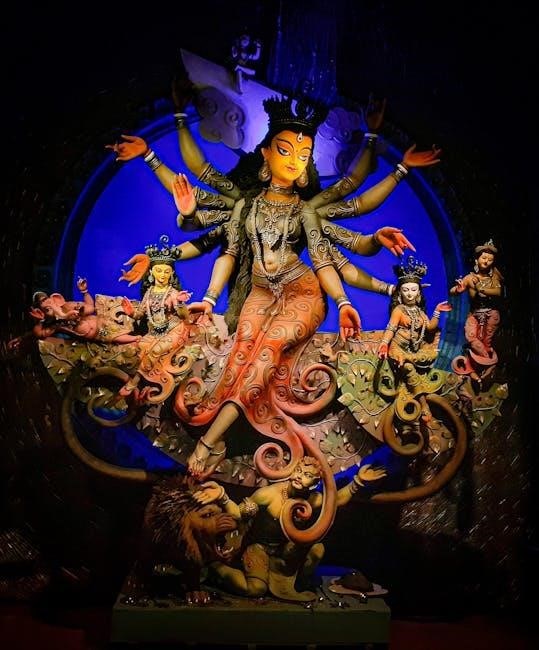
The Mahishasura Mardini Stotram directly commemorates the epic battle between Goddess Durga and the powerful demon Mahishasura. Mahishasura, empowered by a boon, wreaked havoc upon the heavens and earth. The gods, unable to defeat him, collectively channeled their energies, creating Durga, a fierce warrior goddess. The stotram, often available as a PDF for easy download, vividly recounts Durga’s divine intervention.
The narrative details Durga’s fierce combat, ultimately culminating in the slaying of Mahishasura, restoring cosmic order. Accessing the stotram in PDF format allows devotees to connect with this powerful story. The hymn celebrates Durga’s strength and victory, embodying the triumph of good over evil. The widespread availability of the Mahishasura Mardini Stotram PDF ensures the continued retelling and reverence of this foundational Hindu myth.
Content and Structure of the Stotram
The Mahishasura Mardini Stotram, often found as a convenient PDF download, comprises verses praising Goddess Durga and her victory over the demon Mahishasura.
The Meaning of ‘Ayi Giri Nandini’
“Ayi Giri Nandini” – the opening line of the Mahishasura Mardini Stotram – is profoundly evocative, readily available in PDF format for study. ‘Ayi’ is an address, a respectful calling to the Goddess. ‘Giri’ signifies mountains, and ‘Nandini’ refers to the daughter of Nandi, the celestial bull, symbolizing joy and contentment.
This phrase depicts Durga residing on the mountains, bringing delight to the world; The entire stotram, easily accessible as a download, unfolds as a series of praises describing her beauty, power, and the cosmic play of destruction and creation. The PDF versions often include transliteration and translations, aiding comprehension. It’s a poetic invocation, establishing the divine presence and setting the stage for the narrative of Mahishasura’s defeat. Understanding this opening line unlocks a deeper appreciation for the stotram’s overall message of divine feminine power.
Detailed Breakdown of Each Shloka
A comprehensive understanding of the Mahishasura Mardini Stotram, often found in easily downloadable PDF versions, requires a shloka-by-shloka analysis. Each verse builds upon the previous, detailing Durga’s attributes and her eventual triumph. The first shloka, “Ayi Giri Nandini,” introduces the Goddess and her dwelling. Subsequent shlokas elaborate on her radiant form, her weapons, and the fear she instills in demons.
Many PDF resources provide translations and commentaries, explaining the symbolism within each line. For example, descriptions of her various weapons aren’t merely physical attributes but represent different aspects of divine power. Studying these verses, readily available for download, reveals a complex tapestry of mythology and spiritual insight; The stotram isn’t just a story; it’s a meditative journey through the divine feminine.
Key Deities and Their Representation
The Mahishasura Mardini Stotram, frequently available as a PDF for convenient study, centers on Goddess Durga and her multifaceted representation of divine power. While Durga is the primary deity, the stotram subtly incorporates other significant figures from the Hindu pantheon. Vishnu, for instance, is acknowledged through the phrase “Vishnu Vilasini,” highlighting his role in Durga’s manifestation.
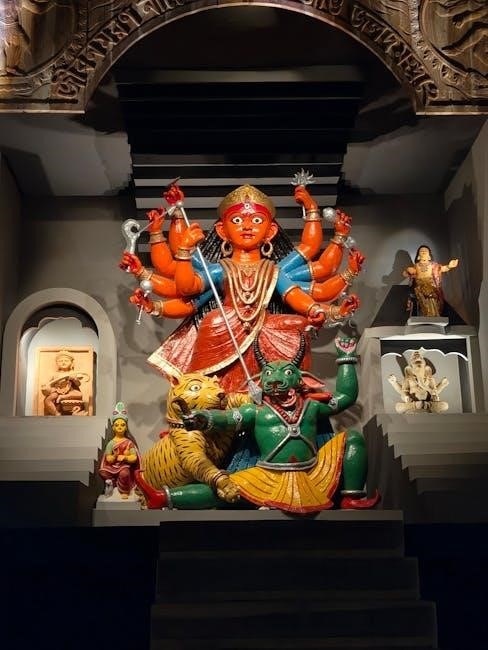
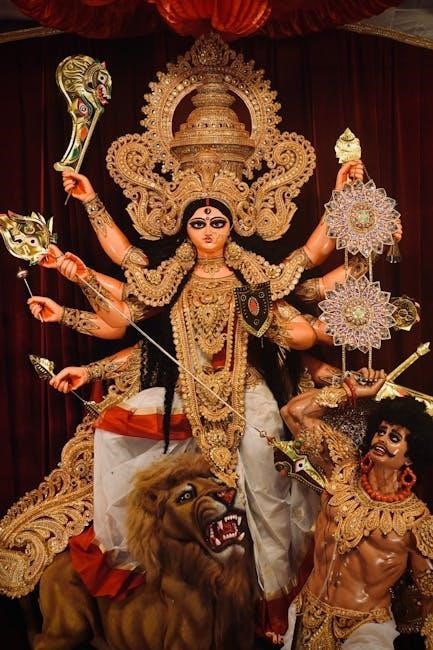
The downloadable PDF versions often include visual depictions of Durga with her various weapons – the trident, conch, and chakra – each symbolizing a specific aspect of divine energy. Furthermore, the stotram implicitly acknowledges the power of Shiva through Durga’s association with the mountains. Understanding these interconnected representations, easily accessible through online resources, enriches the appreciation of the stotram’s profound theological depth.
Availability and Formats
The Mahishasura Mardini Stotram PDF is widely available for free download, alongside MP3 and DOC formats, catering to diverse user preferences online.
Mahishasura Mardini Stotram PDF Download Sources
Numerous online resources provide convenient access to the Mahishasura Mardini Stotram in PDF format. Websites dedicated to Hindu scriptures and devotional content frequently host the stotram for free download. The Internet Archive, for instance, offers a downloadable PDF version in Sanskrit, identified with the ark:/13960/s27m83qhds9 identifier.
Additionally, platforms specializing in stotras and prayers often include the Mahishasura Mardini Stotram within their collections. Searching for “Mahishasura Mardini Stotram PDF” on major search engines will yield a plethora of results, directing users to various download links. Prabhata Stotranidhi also offers a printed version, with a link to purchase available online. These sources ensure global accessibility for devotees seeking to study and recite this powerful hymn.
Users can easily find and download the stotram to their devices, facilitating personal study and devotional practice. The widespread availability in PDF format underscores the stotram’s importance and enduring popularity.
Accessibility on Online Platforms
The Mahishasura Mardini Stotram enjoys widespread accessibility across diverse online platforms, catering to a global audience of devotees. Beyond simple PDF downloads, the stotram is readily available in multiple formats, including MP3 audio files and DOC documents, enhancing user convenience. Many websites dedicated to Hindu spirituality feature the stotram prominently, offering both the Sanskrit text and English translations.
Platforms like YouTube host numerous recitations of the stotram, allowing listeners to learn the correct pronunciation and immerse themselves in its devotional atmosphere. The Internet Archive provides access to scanned versions, contributing to its preservation and wider dissemination.
Furthermore, dedicated apps for Hindu prayers and stotras often include the Mahishasura Mardini Stotram, providing a portable and user-friendly experience. This broad online presence ensures that the stotram remains easily accessible to anyone with an internet connection, fostering its continued practice and reverence.
Different Formats: PDF, MP3, DOC
The Mahishasura Mardini Stotram is conveniently available in a variety of digital formats to suit diverse preferences. The most common format is PDF, offering a readily downloadable and printable version of the Sanskrit text, often accompanied by transliteration and English translations. This allows for focused study and personal recitation.
For auditory learners, MP3 audio files provide a valuable resource, enabling listeners to learn the correct pronunciation and absorb the stotram’s melodic rhythm. Numerous recordings by various artists are available online;
Additionally, the stotram can be found in DOC format, facilitating easy editing and customization for personal use. These varied formats ensure accessibility for all, whether one prefers to read, listen, or actively engage with the text. The widespread availability in these forms underscores the stotram’s enduring popularity and devotional significance.
Benefits and Significance
Accessing the Mahishasura Mardini Stotram PDF facilitates devotional practice, offering spiritual benefits and a connection to Durga Puja traditions for devotees.
Spiritual Benefits of Recitation
The accessibility of the Mahishasura Mardini Stotram in PDF format significantly enhances the opportunity for regular recitation, unlocking a wealth of spiritual benefits. Devotees find that consistent chanting fosters inner peace, reduces stress, and cultivates a deeper connection with the Divine Feminine, Goddess Durga.
The stotram’s powerful verses are believed to purify the mind and body, removing negative energies and obstacles. Recitation is said to enhance positive qualities like courage, strength, and wisdom. Furthermore, the stotram is considered a potent tool for overcoming challenges and achieving success in various aspects of life.
Downloading and utilizing the PDF allows for convenient practice anytime, anywhere, promoting a continuous spiritual journey. The stotram’s vibrations are thought to create a protective shield, safeguarding the devotee from harm and fostering overall well-being. It’s a pathway to self-realization and liberation.
The Stotram’s Role in Durga Puja
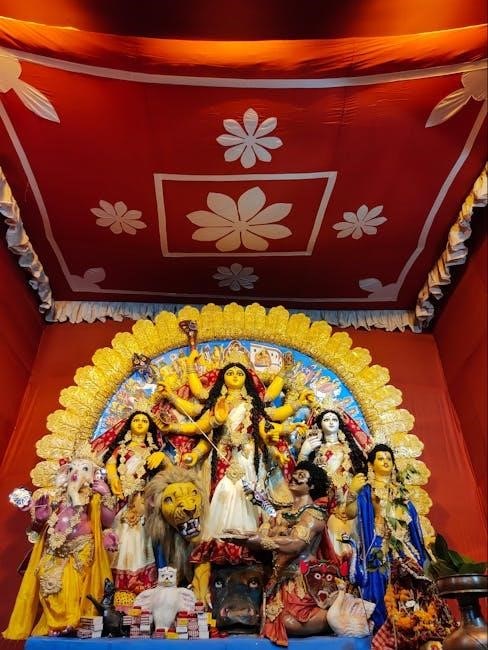
The Mahishasura Mardini Stotram holds a central and revered position within the celebrations of Durga Puja. Its recitation is considered integral to invoking the blessings of Goddess Durga and commemorating her victory over the demon Mahishasura. The readily available PDF versions facilitate widespread participation in this sacred practice.
During Durga Puja, the stotram is often chanted collectively in temples and homes, creating a powerful devotional atmosphere. It’s believed to amplify the energy of the puja and enhance the efficacy of prayers. The verses narrate the Goddess’s glory and power, reinforcing faith and devotion among worshippers.
Having the stotram in PDF format allows devotees to follow along during ceremonies, deepening their understanding and connection to the hymn. It ensures accessibility for all, regardless of location or prior knowledge, fostering a unified experience of devotion during this auspicious festival.
Significance of Reciting During Navaratri
Reciting the Mahishasura Mardini Stotram during Navaratri is profoundly significant, as this nine-night festival is dedicated to the worship of Goddess Durga in her various forms. The stotram’s verses vividly depict Durga’s power and her triumph over evil, aligning perfectly with the festival’s theme. Conveniently, PDF versions of the stotram are widely available for easy access.
Each day of Navaratri is associated with a specific form of the Goddess, and the stotram serves as a powerful invocation, honoring her divine energy. It’s believed that consistent recitation during these nine nights can remove obstacles, bestow blessings, and promote spiritual growth.
The accessibility of the stotram in PDF format encourages widespread participation, allowing devotees to immerse themselves in its devotional power throughout Navaratri. It’s a cherished tradition, strengthening the connection between worshippers and the divine feminine energy.
Learning and Recitation
Numerous resources, including easily downloadable Mahishasura Mardini Stotram PDF files, aid in learning and proper recitation of this powerful and sacred hymn.
Pronunciation Guide for Beginners
Embarking on the recitation of the Mahishasura Mardini Stotram can seem daunting, particularly for beginners unfamiliar with Sanskrit pronunciation. Fortunately, readily available resources, often accompanying Mahishasura Mardini Stotram PDF downloads, offer invaluable assistance. Many online platforms provide audio recitations, allowing learners to hear the correct enunciation of each syllable and shloka.
Pay close attention to the nasal sounds (like ‘ṃ’) and the subtle differences between short and long vowels. Utilizing transliteration guides, frequently included within PDF versions, can bridge the gap between the Devanagari script and Romanized pronunciation. Breaking down each shloka into smaller phrases and practicing slowly is crucial. Don’t hesitate to seek guidance from experienced practitioners or utilize online pronunciation tools to refine your articulation. Consistent practice, coupled with careful listening, will gradually build confidence and accuracy.
Remember, the intention and devotion behind the recitation are as important as perfect pronunciation.
Resources for Learning the Stotram
Numerous resources exist to facilitate learning the Mahishasura Mardini Stotram, often complementing freely available Mahishasura Mardini Stotram PDF downloads. Websites dedicated to Hindu scriptures and devotional practices frequently host the stotram along with detailed explanations and translations. YouTube channels offer video tutorials, breaking down the stotram’s pronunciation and meaning.
Several mobile applications provide the stotram text, audio recitations, and even learning tools like quizzes. Online forums and communities dedicated to Sanskrit and Hindu devotional music can connect you with experienced practitioners willing to offer guidance. Prabhata Stotranidhi, a popular book, contains the stotram and is available for purchase.
The Internet Archive provides access to digitized versions of the stotram. Remember to cross-reference information from multiple sources to ensure accuracy and deepen your understanding of this powerful hymn.
Tips for Effective Recitation
Effective recitation of the Mahishasura Mardini Stotram, even with a Mahishasura Mardini Stotram PDF for reference, goes beyond simply reading the words. Prioritize correct pronunciation; utilize audio resources to familiarize yourself with the sounds of each syllable. Begin slowly, focusing on clarity and rhythm before increasing speed.
Cultivate a peaceful and focused mindset before recitation, creating a conducive atmosphere. Understanding the meaning of each shloka enhances the devotional experience, transforming recitation into a meditative practice. Consistent practice is key to memorization and fluency.
Consider reciting during auspicious times, such as Navaratri, to amplify the stotram’s benefits. Maintain reverence and sincerity throughout the recitation, offering your devotion to the Divine Mother. Remember, the intention behind the recitation is as important as the recitation itself.

Variations and Translations
Numerous English translations of the Mahishasura Mardini Stotram exist, alongside Sanskrit texts and transliterations, often found within PDF versions.
Different Schools of Interpretation
The Mahishasura Mardini Stotram, frequently available as a PDF download, is subject to diverse interpretations across various schools of Hindu thought. Some view the stotram primarily as a shakti-centric hymn, emphasizing the divine feminine power – Durga – and her victory over demonic forces. This perspective highlights the stotram’s role in empowering devotees and fostering inner strength.
Other schools emphasize the tantric aspects, interpreting the deities and mantras within the stotram as symbolic representations of cosmic energies and spiritual practices. These interpretations often delve into the deeper philosophical underpinnings of the text, exploring its connections to kundalini yoga and chakra activation.
Furthermore, Advaita Vedanta perspectives may view the stotram as an allegory for the realization of non-duality, where Mahishasura represents the ego and Durga symbolizes the ultimate reality. The downloadable PDF versions often include commentaries reflecting these varied viewpoints, allowing practitioners to explore the stotram’s multifaceted meanings.
English Translations and Their Nuances
Numerous English translations of the Mahishasura Mardini Stotram, often found accompanying PDF versions, exist, each capturing slightly different nuances of the original Sanskrit. Direct, literal translations prioritize accuracy but may lack the poetic beauty and depth of the original. More interpretive translations aim to convey the stotram’s emotional and spiritual essence, sometimes employing evocative language and imagery.
A key challenge lies in translating complex Sanskrit concepts and metaphors into English equivalents. For instance, terms like ‘tapas’ or ‘maya’ carry layers of meaning that are difficult to fully encapsulate in a single word. Different translators may choose different approaches, resulting in variations in interpretation.
Therefore, comparing multiple translations alongside the Sanskrit text (available in many PDFs) is recommended. This allows for a richer understanding of the stotram’s multifaceted layers and appreciating the translator’s unique perspective and stylistic choices.
Sanskrit Text and Transliteration
Access to the original Sanskrit text is crucial for a deep understanding of the Mahishasura Mardini Stotram, and many PDF versions include it alongside transliterations. Transliteration represents Sanskrit sounds using the Roman alphabet, aiding those unfamiliar with the Devanagari script. However, transliteration schemes vary – IAST (International Alphabet of Sanskrit Transliteration) is a common, scholarly standard.
Having both the Sanskrit and transliteration allows for accurate pronunciation and a closer connection to the stotram’s original form. Some PDFs also provide word-by-word meanings, further assisting in comprehension. It’s important to note that pronunciation can subtly affect meaning in Sanskrit, so audio recitations (often linked from PDF sources) are invaluable.
Carefully comparing the Sanskrit text with transliteration and translations helps to unravel the stotram’s poetic structure and philosophical depth, enriching the overall experience of recitation and contemplation.