Minolta Maxxum 7000: A Comprehensive Guide
Delve into the world of the Minolta Maxxum 7000 with this detailed guide, referencing the 156.4MB service manual for repair and operational insights.
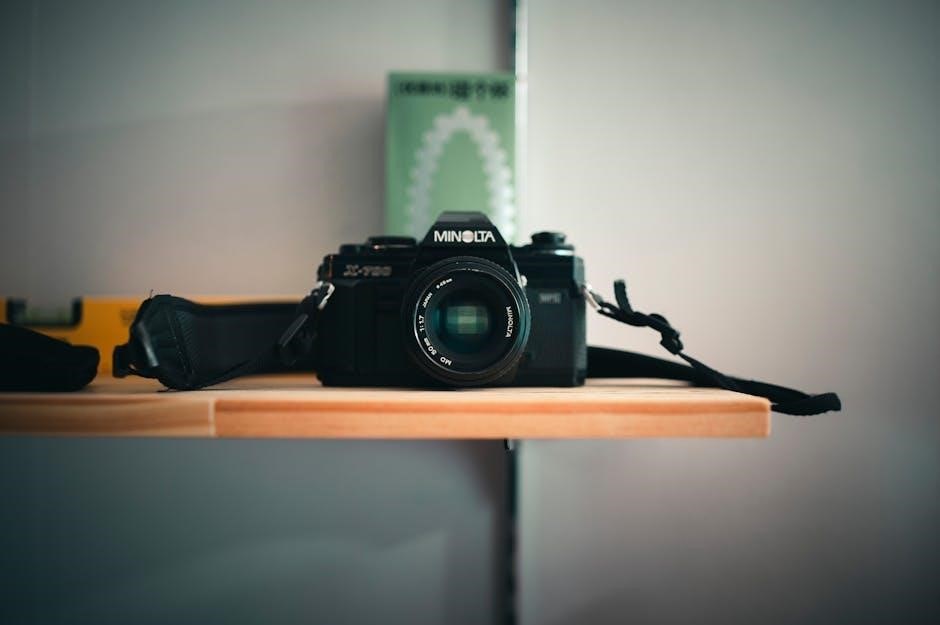
The Minolta Maxxum 7000, a groundbreaking 35mm film SLR, revolutionized photography upon its release; This camera, also known as the Dynax or Alpha 7000 in some regions, introduced innovative features like the Sonic Imager autofocus system.
This comprehensive guide, drawing from the detailed 156.4MB service manual, aims to provide both novice and experienced photographers with a thorough understanding of its operation and maintenance. We will explore everything from basic controls and focusing modes to advanced settings and troubleshooting.
Prepare to unlock the full potential of this classic camera and rediscover the joy of film photography with this in-depth exploration.
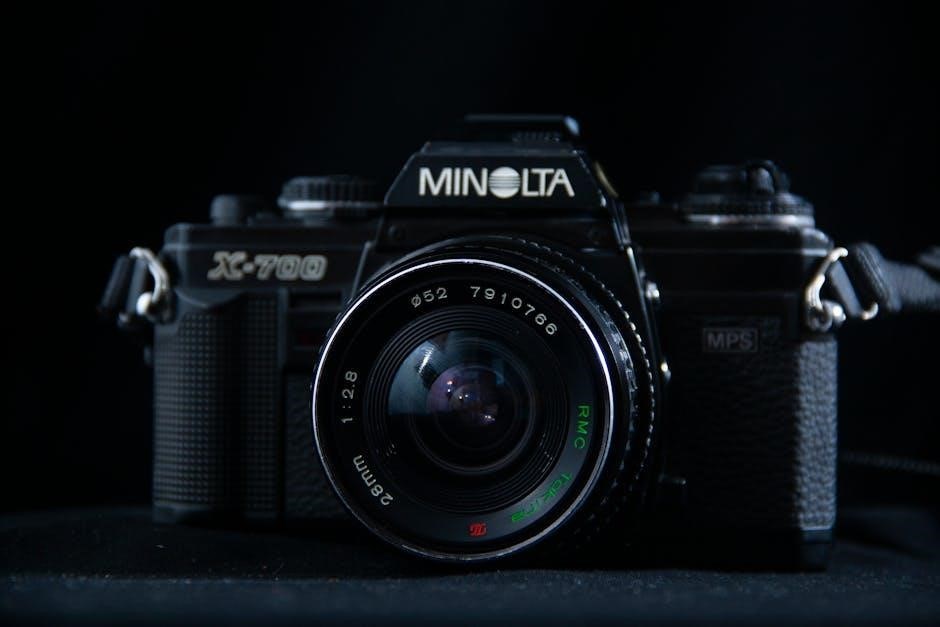
Historical Context & Significance
Released in 1985, the Minolta Maxxum 7000 marked a pivotal moment in camera technology. It was among the first SLR cameras to integrate autofocus directly into the lens, a significant departure from previous systems. This innovation, detailed within the extensive 156.4MB service manual, dramatically improved focusing speed and accuracy for amateur and professional photographers alike.
The Maxxum 7000 challenged established brands like Canon and Nikon, forcing them to rapidly adopt autofocus technology. Its success paved the way for future generations of autofocus SLRs and cemented Minolta’s position as a leader in photographic innovation.
Key Features and Specifications
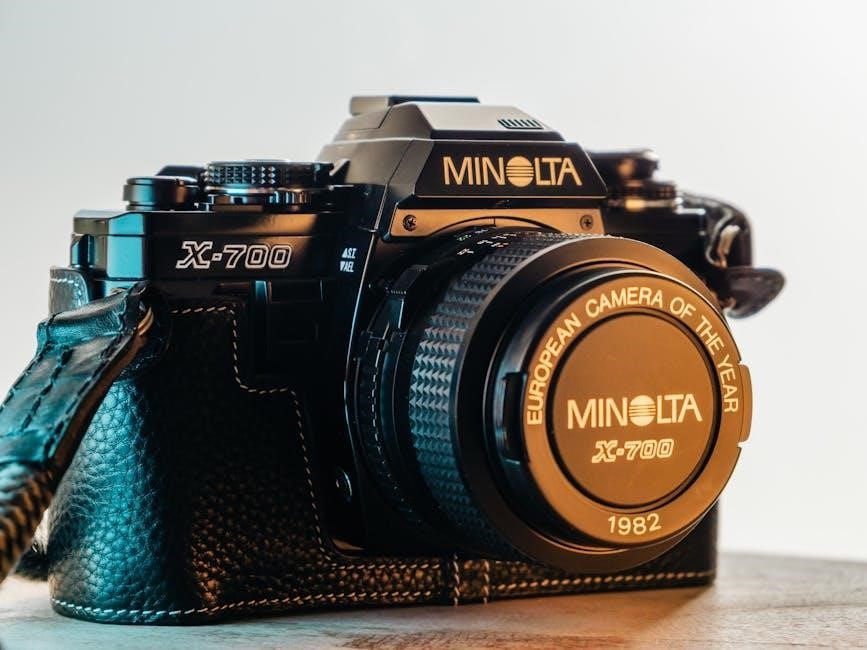
The Minolta Maxxum 7000, comprehensively documented in its 156.4MB service manual, boasts a sophisticated feature set. It features a program auto-exposure mode, aperture-priority, shutter-priority, and full manual control. The camera utilizes the innovative Sonic Imager autofocus system, offering spot, flexible spot, and multi-zone focusing options.
Key specifications include a focal plane shutter with speeds from 2 to 1/2000 seconds, and film ISO settings ranging from 25 to 3200. It accepts Minolta A-mount lenses and is powered by 4 AA batteries. The robust build quality ensures durability for years of photographic use.
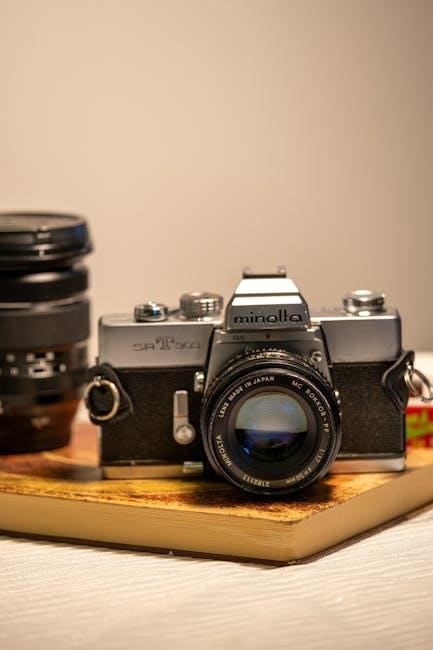
Understanding the Camera Body & Controls
Explore the Minolta Maxxum 7000’s layout, referencing the detailed service manual for precise control locations and functions within this 35mm film camera.
Top Panel Controls: Mode Dial, Shutter Button, LCD
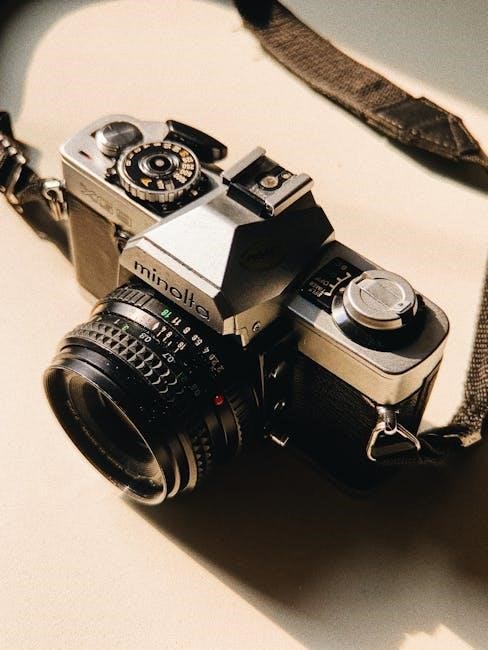
The Minolta Maxxum 7000’s top panel houses essential controls for operation. The Mode Dial allows selection between Program, Aperture Priority, Shutter Priority, and Manual exposure modes, offering versatile shooting options.
The Shutter Button initiates the exposure process, with a half-press for focusing and full-press for capturing the image. The integrated LCD provides crucial shooting information, displaying settings like shutter speed, aperture, exposure compensation, and battery level;
Referencing the service manual ensures a complete understanding of each control’s function and customization possibilities, maximizing the camera’s potential for both novice and experienced photographers.
Rear Panel Controls: Focus Area Selection, Exposure Compensation
The Minolta Maxxum 7000’s rear panel provides access to critical settings for precise image control. Focus Area Selection allows photographers to choose between Spot, Flexible Spot, and Multi-zone focusing modes, tailoring focus to the subject.
Exposure Compensation enables adjustments to the camera’s metering system, brightening or darkening images as needed for optimal exposure. These controls, detailed within the service manual, are vital for achieving desired creative effects.
Mastering these settings unlocks the camera’s full potential, ensuring consistently well-exposed and sharply focused photographs.
Bottom Panel: Battery Compartment & Film Compartment
The Minolta Maxxum 7000’s bottom panel houses both the battery compartment and the film compartment, essential for operation and image capture. The battery compartment securely holds the power source, ensuring reliable performance during shooting sessions.
Adjacent to it, the film compartment facilitates easy film loading and unloading, crucial for utilizing the camera’s 35mm film capabilities.
Referencing the service manual aids in understanding proper battery installation and film handling procedures, maximizing the camera’s functionality and longevity.
Focusing System & Modes
Explore the Minolta Maxxum 7000’s advanced focusing capabilities, detailed within the service manual, offering spot, flexible spot, and multi-zone focusing options.
Sonic Imager Focusing System Explained
The Minolta Maxxum 7000 revolutionized autofocus with its innovative Sonic Imager system. Unlike traditional contrast detection, Sonic Imager utilized an ultrasonic sensor to measure distance to the subject directly. This sensor emitted and received ultrasonic waves, calculating focus based on the time it took for the waves to return.
This method offered significantly faster and more accurate focusing, especially in challenging conditions. The service manual details how the system analyzes these signals, enabling precise adjustments. It’s a phase-detection system, but uniquely implemented with sonic technology, providing a distinct advantage over contemporary cameras. Understanding this core technology is key to maximizing the 7000’s focusing performance.
Focus Area Selection & Modes (Spot, Flexible Spot, Multi-zone)
The Maxxum 7000 offers versatile focus area control, adapting to diverse shooting scenarios. Spot focus centers on a tiny area, ideal for precise subject isolation. Flexible Spot allows moving the focus point across the frame, offering greater compositional freedom. The service manual illustrates these selections within the viewfinder display.
Multi-zone utilizes multiple focus sensors, automatically selecting the closest subject – perfect for dynamic scenes. Users can switch between these modes via dedicated controls on the rear panel. Mastering these options, as detailed in the instruction manual, unlocks the camera’s full autofocus potential, ensuring sharp images consistently.
Focus Lock & Focus Priority
The Minolta Maxxum 7000 provides crucial control over focus behavior. Focus Lock, activated by half-pressing the shutter button, maintains focus even when recomposing the shot – essential for off-center subjects. The instruction manual details how to effectively utilize this feature for consistently sharp results.
Focus Priority dictates whether the camera prioritizes achieving focus before allowing the shutter to release. This prevents blurry images caused by insufficient light or moving subjects. Understanding these settings, as outlined in the service manual, empowers photographers to confidently capture fleeting moments with precision and clarity.
Exposure Modes & Metering
Explore Program, Aperture Priority, Shutter Priority, and Manual modes, guided by the instruction manual, for precise control over your Minolta Maxxum 7000’s exposure.
Program Mode (P)
Program Mode (P) on the Minolta Maxxum 7000 offers a convenient, fully automatic shooting experience. The camera intelligently selects both the aperture and shutter speed based on its internal metering system, aiming for optimal exposure in various lighting conditions. This mode is ideal for general photography when you prioritize ease of use and quick response.
However, Program Mode isn’t entirely hands-off. The instruction manual details how you can subtly influence the exposure within Program mode using exposure compensation. This allows for creative control, brightening or darkening images as desired without switching to a more complex mode. It’s a fantastic starting point for beginners and a reliable option for experienced photographers seeking speed and simplicity.
Aperture Priority (A)
Aperture Priority (A) mode on the Minolta Maxxum 7000 grants you direct control over the lens aperture, influencing depth of field. The camera automatically sets the shutter speed to achieve proper exposure, based on your chosen aperture and the scene’s brightness. This mode is perfect for controlling background blur (bokeh) or ensuring sharpness throughout the image.
The instruction manual emphasizes using Aperture Priority for portraits (wide aperture for blurred backgrounds) or landscapes (narrow aperture for maximum depth of field). Remember to monitor the shutter speed displayed; slow speeds may require a tripod to avoid motion blur. Exposure compensation remains available for fine-tuning the overall brightness.
Shutter Priority (S)
Shutter Priority (S) mode on the Minolta Maxxum 7000 allows you to dictate the shutter speed, controlling motion blur and freezing action. The camera then automatically selects the appropriate aperture for correct exposure, responding to the scene’s lighting conditions. This is ideal for sports photography or capturing flowing water effects.
The manual suggests using fast shutter speeds to freeze fast-moving subjects, and slower speeds to intentionally blur motion. Be mindful of the resulting aperture; very wide apertures may result in shallow depth of field. Exposure compensation is still accessible for adjusting brightness as needed, ensuring optimal results.
Manual Mode (M)
In Manual (M) mode, the Minolta Maxxum 7000 grants complete creative control, requiring you to independently set both the aperture and shutter speed. This mode is favored by experienced photographers seeking precise exposure control, particularly in challenging lighting scenarios where automatic modes may struggle.
The camera’s metering system provides a reference reading, displayed on the LCD, but the final exposure decision rests with you. Careful consideration of ISO, aperture’s impact on depth of field, and shutter speed’s effect on motion is crucial. Utilize the exposure compensation feature to fine-tune your settings for perfect results.
Film Handling & Loading
Proper film loading and rewinding are essential for successful photography with the Minolta Maxxum 7000, as detailed in the comprehensive service manual.
Film Loading Procedure
Initiating film loading on the Minolta Maxxum 7000 requires opening the film compartment located on the camera’s bottom panel. Ensure the camera back is fully opened before proceeding. Insert the 35mm film cartridge into the film chamber, ensuring it seats correctly.
Gently thread the film leader across the film pressure plate and into one of the sprockets on the take-up reel. Advance the film using the film advance lever until the film engages with the take-up sprocket. Close the camera back securely.
The camera will automatically begin advancing the film; the frame counter will indicate the number of exposures taken. Refer to the service manual for detailed diagrams and troubleshooting tips regarding film loading.
Film Rewinding & Unloading
To rewind the film in your Minolta Maxxum 7000, locate the film rewind crank on the camera’s top panel. Gently pull the rewind crank outward and begin turning it in the direction indicated by the arrow.
You will feel resistance initially, which will lessen as the film is rewound back into the cartridge. Continue rewinding until you feel the film leader completely disengage from the take-up spool.
Open the camera back and carefully remove the film cartridge. The service manual provides detailed illustrations of this process. Proper rewinding prevents damage to the film and ensures successful development of your photographs.
Compatible Film Types
The Minolta Maxxum 7000 is designed for use with 35mm film, offering versatility for various photographic needs. It readily accepts standard color negative film (ISO 25-3200), black and white film, and even slide film (transparency film).
The camera’s automatic film speed setting (DX coding) simplifies operation with most modern film cartridges. However, for films without DX coding, manual ISO setting is required.
Refer to the service manual for specific recommendations regarding film sensitivity and optimal exposure settings. Experimenting with different film types allows photographers to achieve diverse aesthetic results.
Advanced Features & Settings
Unlock the Maxxum 7000’s full potential through custom functions, depth of field preview, and exposure compensation—detailed within the service manual.
Depth of Field Preview
The Minolta Maxxum 7000 offers a valuable Depth of Field (DOF) Preview function, allowing photographers to visually assess the extent of focus before capturing the image. Activating this feature, typically via a dedicated button or menu setting, stops down the lens to the selected aperture.
This simulates the actual depth of field that will be recorded in the final photograph, enabling precise control over focus areas. It’s particularly useful for landscape or macro photography where accurate DOF is crucial. The service manual details the exact location of the DOF preview button and any associated menu options for customization. Remember to consider the viewfinder’s brightness reduction when using this function.
Exposure Compensation & AE Lock
The Minolta Maxxum 7000 provides both Exposure Compensation (EC) and Auto Exposure (AE) Lock functionalities for precise control over image brightness. EC allows you to intentionally over or underexpose the image, useful in challenging lighting situations. The service manual details the EC range, typically expressed in stops (+/-).
AE Lock, activated via a dedicated button, fixes the exposure at a specific point, even if the scene’s lighting changes. This is invaluable for panning shots or subjects against bright backgrounds. Mastering these features, as outlined in the manual, ensures consistently well-exposed photographs.
Custom Functions & Menu Settings
The Minolta Maxxum 7000’s menu system, detailed within the service manual, offers a range of customizable functions to tailor the camera to your shooting style. These settings impact everything from autofocus behavior and metering modes to display preferences and self-timer options.
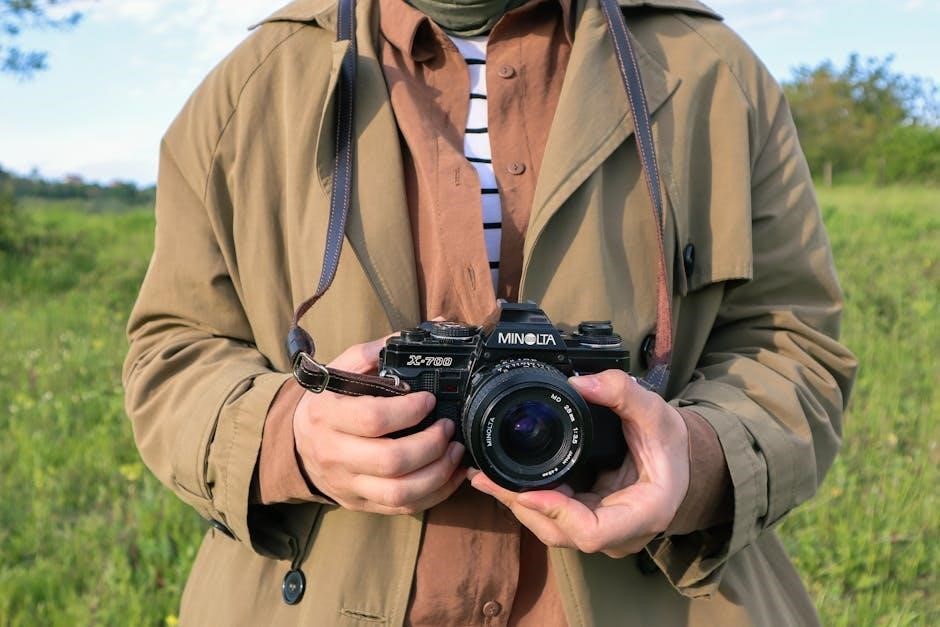
Users can personalize the camera’s response, optimizing it for specific photographic genres. The manual provides a comprehensive list of each function, explaining its purpose and available settings. Exploring these customizations unlocks the full potential of the Maxxum 7000, enhancing workflow and creative control.
Troubleshooting Common Issues
Refer to the 156;4MB service manual for detailed error code explanations, battery solutions, and lens compatibility guidance for your Minolta Maxxum 7000.
Error Codes & Their Meanings
Decoding the Minolta Maxxum 7000’s error messages is crucial for effective troubleshooting, and the comprehensive 156.4MB service manual is your primary resource. These codes, displayed on the camera’s LCD, pinpoint specific malfunctions within the system. For instance, a “C:01” error often indicates a communication issue between the camera body and a connected lens. Other codes relate to film transport problems, shutter malfunctions, or internal electronic failures.
The manual provides a detailed table listing each error code alongside its corresponding description and potential solutions. Understanding these codes empowers users to diagnose problems independently, potentially avoiding costly repairs. Always consult the manual before attempting any self-repair, as incorrect procedures could cause further damage.
Battery Issues & Solutions
The Minolta Maxxum 7000 relies on a stable power source for optimal performance, and the 156.4MB service manual details battery-related troubleshooting. Common issues include depleted batteries, incorrect battery installation, or corrosion within the battery compartment. Ensure you’re using the correct type of battery – typically 4x AA batteries – and that they are inserted with the proper polarity.
If the camera fails to power on, first replace the batteries with fresh ones. Inspect the battery contacts for corrosion and clean them gently with a cotton swab and isopropyl alcohol. The manual also outlines procedures for checking the battery compartment for any physical damage that might impede connection.
Lens Compatibility & Problems
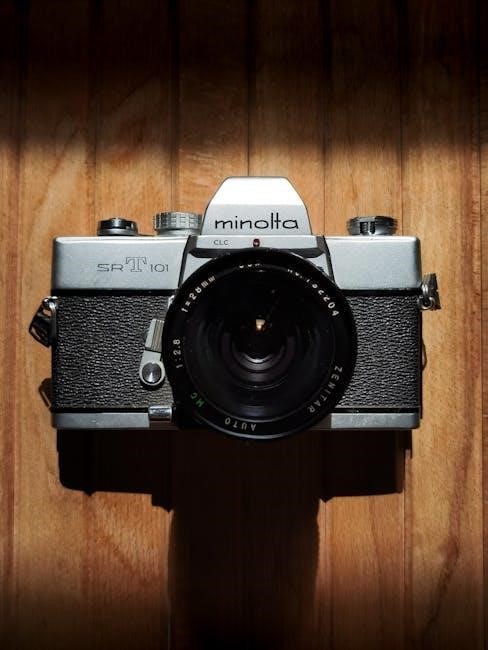
The Minolta Maxxum 7000, as detailed within the 156.4MB service manual, utilizes the Minolta A-mount, offering compatibility with a wide range of lenses. However, issues can arise. Incorrect lens attachment, damaged lens contacts, or incompatibility with certain third-party lenses are potential problems.
Ensure the lens is securely mounted and the aperture ring is set correctly. Inspect the lens contacts on both the camera body and the lens for dirt or damage; clean them carefully. The service manual provides diagrams for proper lens attachment and troubleshooting steps for common communication errors between the camera and lens.